Dr. Gymbro
←

#liver health

1 article
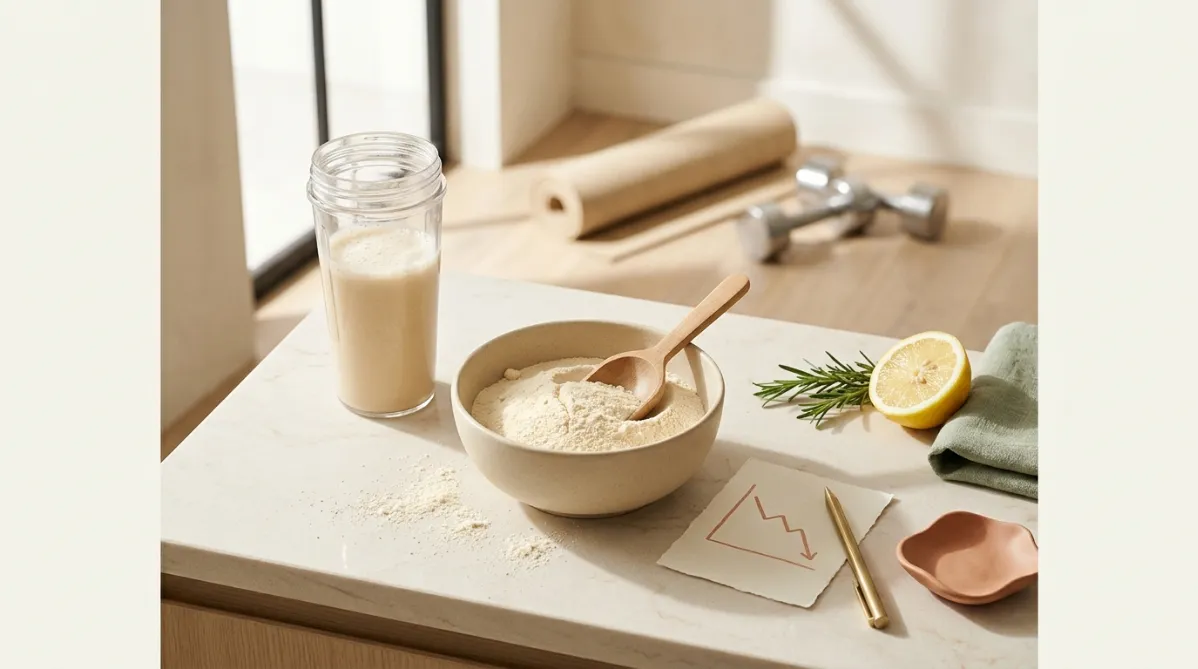
A wide, softly lit editorial still life on a warm off-white stone countertop. In the center sits a matte ceramic bowl of fine pale cream whey protein powder with a wooden scoop resting in it, a few fine grains dusted across the surface. To the left, a clear glass shaker bottle filled with a creamy, lightly frothy shake catches a gentle highlight. To the right, a minimalist arrangement of fresh produce and wellness cues: a halved lemon, a sprig of green rosemary, and a small folded sage-green linen towel. In the soft-focus background, a neatly rolled yoga mat and a pair of brushed-steel dumbbells rest on a pale oak floor beside a tall window. Morning sunlight streams in diagonally, creating long, gentle shadows and a luminous, airy atmosphere.

Subtle nods to the "liver" and "lab results" themes come through in tasteful, abstract ways: a small sheet of cream paper with a simple, hand-drawn downward-trending line graph in muted terracotta ink sits beside the bowl, with a slim brass pen laid across it. A delicate terracotta-colored ceramic dish nearby evokes organic form without being anatomical.

The color palette is calm and modern: warm creams, soft sand, sage green, muted terracotta, and touches of brushed brass. Shallow depth of field, crisp focus on the powder and scoop, with a creamy blurred background. Shot in a clean, contemporary magazine style with natural film-like grain, gentle contrast, and generous negative space on the left and right edges for headline overlay. Feels trustworthy, fresh, and approachable, like a trendy health and science journal cover.
supplements

Czy serwatka niszczy twoją wątrobę? 59 sportowców twierdzi inaczej

BY DR. GYMBRO ·

Myślisz, że białko serwatkowe szkodzi wątrobie? Randomizowane, podwójnie zaślepione badanie na 59 wytrenowanych sportowcach wykazało odwrotny trend: po 8 tygodniach spożywania 30 g dziennie poziomy ALT, AST i CK spadły, a w grupie placebo pozostały niezmienione lub wzrosły. Jedynie ALT wykazało istotną różnicę między sportowcami siłowymi a wytrzymałościowymi, a wynik CRP to jedynie trend wewnątrz grupy. Oto, co naprawdę pokazuje badanie, czego nie udowodnią te markery i kto wciąż powinien zachować ostrożność.

This page is available in